Engine Cooling
How the Cooling System Works
The cooling system keeps engine temperature in a safe operating range by moving coolant through the engine and radiator, transferring heat before it can build up. A properly working cooling system helps prevent overheating and keeps the engine running at peak efficiency.
Coolant flows through the engine block and cylinder head, absorbing heat as it passes.
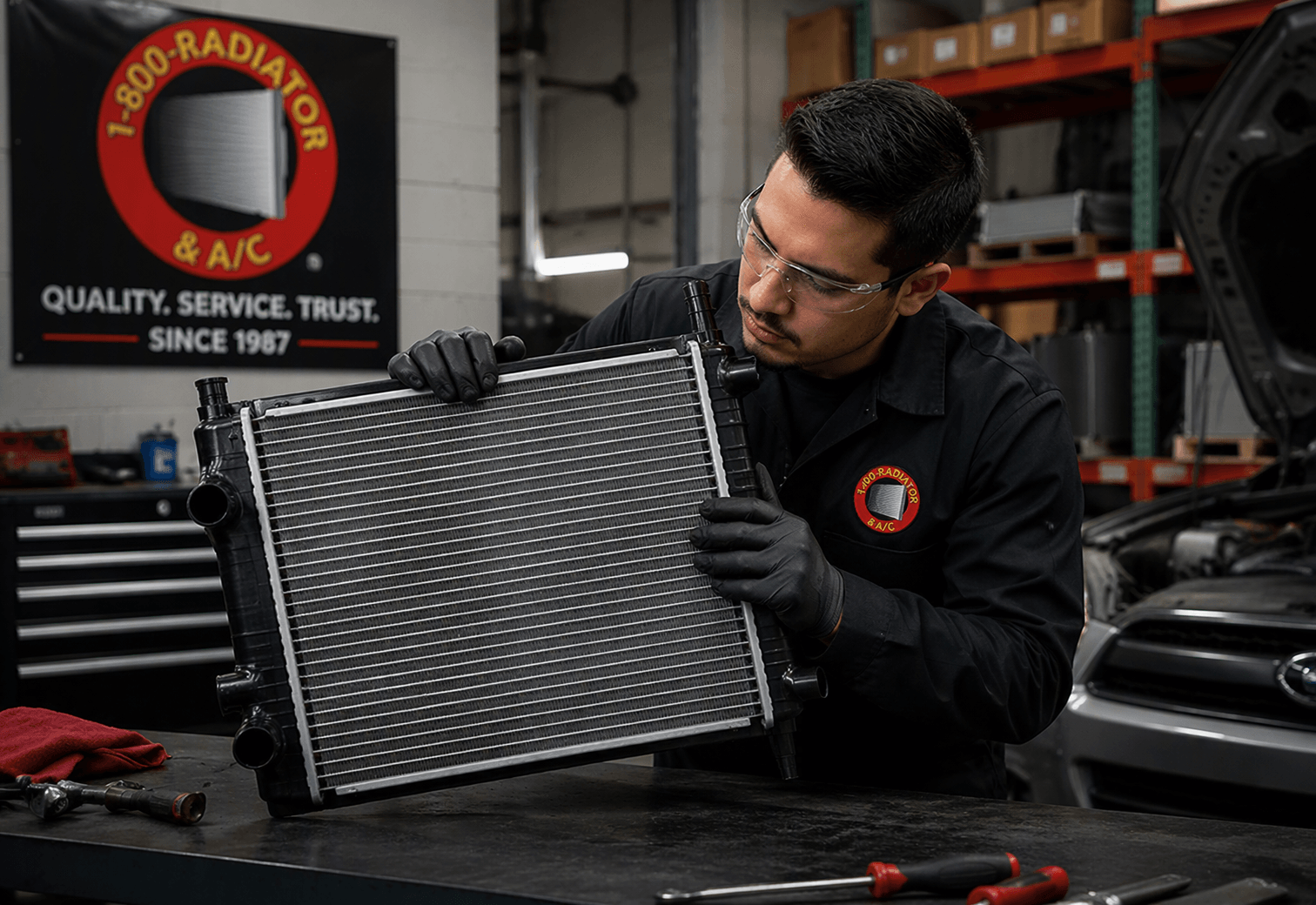
The heated coolant travels to the radiator, where outside air and the cooling fan pull the heat away from it.
The thermostat opens and closes to regulate coolant flow, keeping the engine at the right operating temperature.
The water pump keeps coolant circulating continuously between the engine and radiator, so heat transfer never stops.
The radiator cap keeps the system sealed and pressurized, and properly working hoses and clamps keep it that way, so coolant does not boil over or leak out under normal driving conditions.
Signs of Cooling System Failure
Cooling system components wear down over time, and a single worn part is often enough to let heat build up faster than the system can release it.
Common Symptoms of a Cooling System Issue:
Engine overheating, which is the clearest sign that heat is no longer being managed properly.
Coolant leaks or low coolant levels that point to a worn hose, radiator, or cap seal.
Rust or corrosion inside the radiator, often caused by old or contaminated coolant that can no longer protect the system.
Steam from under the hood, which means coolant has reached its boiling point and needs immediate attention.
Physical damage or clogged coolant passages that reduce cooling efficiency over time.
Overheating even when the radiator looks fine, which can point to a bad thermostat, failing water pump, cooling fan issue, or air trapped in the system.